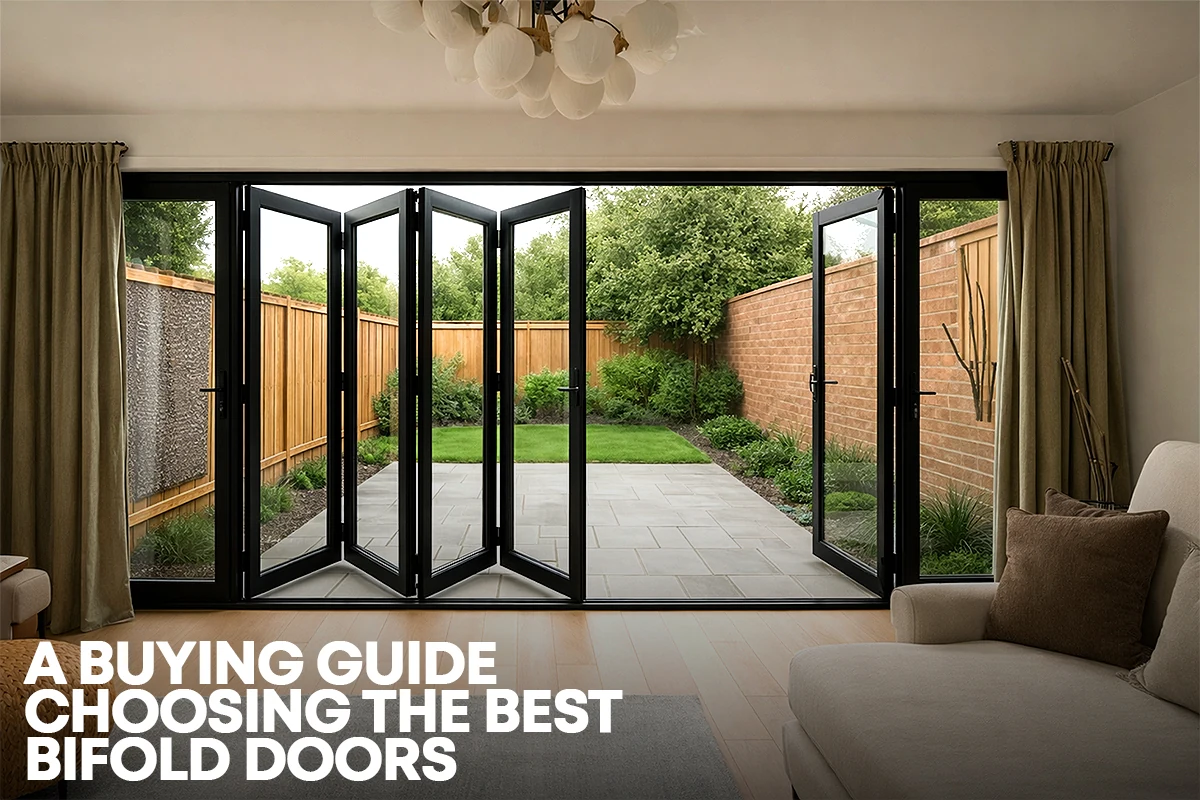
If you're looking for a door to fit into a smaller space, you might consider buying a bifold door. These doors can be a good change of pace from traditional doors, offering the perfect blend of functionality and elegance, as well as freeing up your floor space.
But choosing the best bifold door for your home can be a headache. Looking up the best materials, configuration and how to maintain them can take a lot of time. In this guide, we aim to provide all the information you need on bifold doors in one place, so you don't need to look anywhere else.
What are Bifold Doors
Bifold doors, also known as folding doors, are made using multiple panels hinged together that slide along a track and fold to the side when opened. Instead of swinging open like a traditional single-hinged door, bifold doors slide and fold, stacking neatly to one or both sides of an opening. This design allows them to create a much wider clear opening than conventional doors. The most common designs have two panels folding in half, but larger bifold doors can come with multiple hinged panels that fold like an accordion.
Common Materials
One of the first things to consider while choosing a bifold door is its material. This choice not only affects appearance and performance, but also cost and maintenance, so thinking over it is a must.
Consider your local climate and the location of the door when choosing the material. For example, aluminium and uPVC doors handle weather exposure very well, whereas wood may need extra care in harsh climates. If you're choosing an internal door, wood is the perfect material, while aluminium is a perfect choice for external applications. Below we have explained some common materials bifold doors are made of in detail:
Aluminium
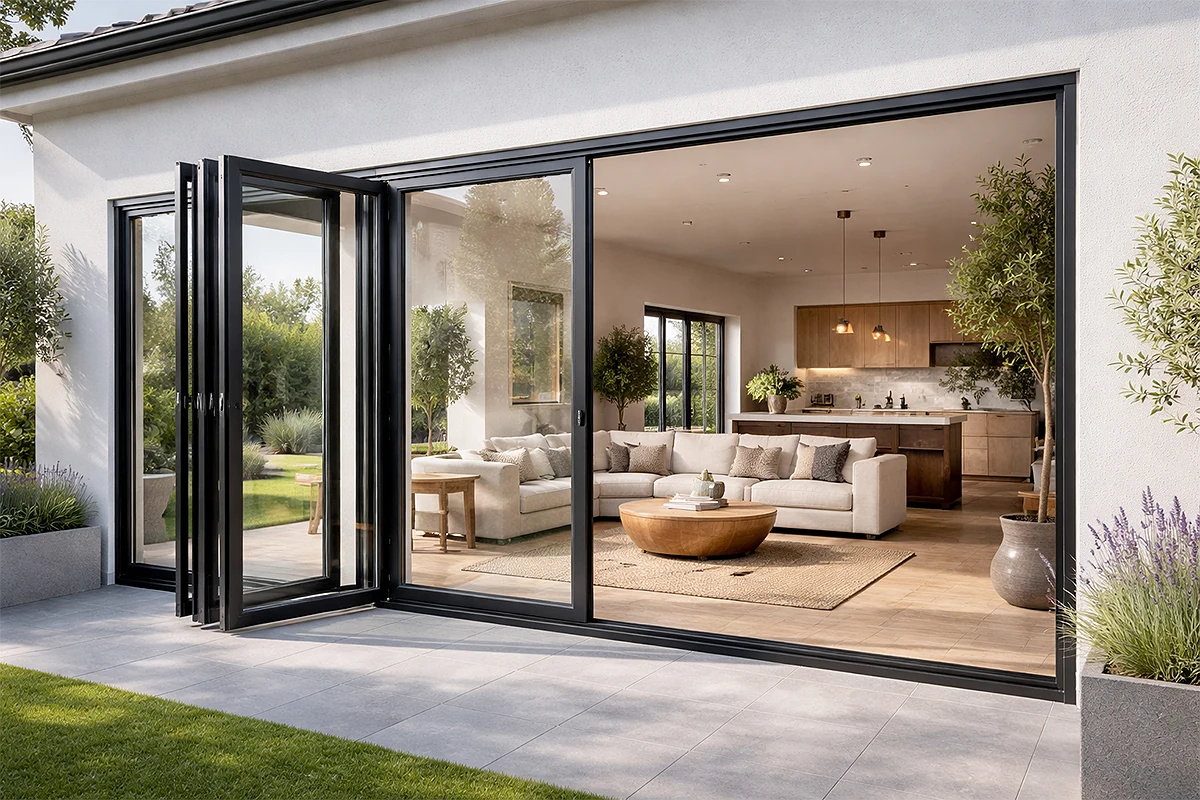
Due to their strength, durability and low maintenance requirements, aluminium bifold doors are very popular. They are lightweight but very strong, so its frames are slimmer while supporting large glass panels. Aluminium doesn't warp or rot and typically comes with long-lasting powder-coated finishes, so its upkeep is minimal. These aluminium frames tend to be mid-to-high priced, but they offer excellent longevity and often come with long warranties.
uPVC (Vinyl)
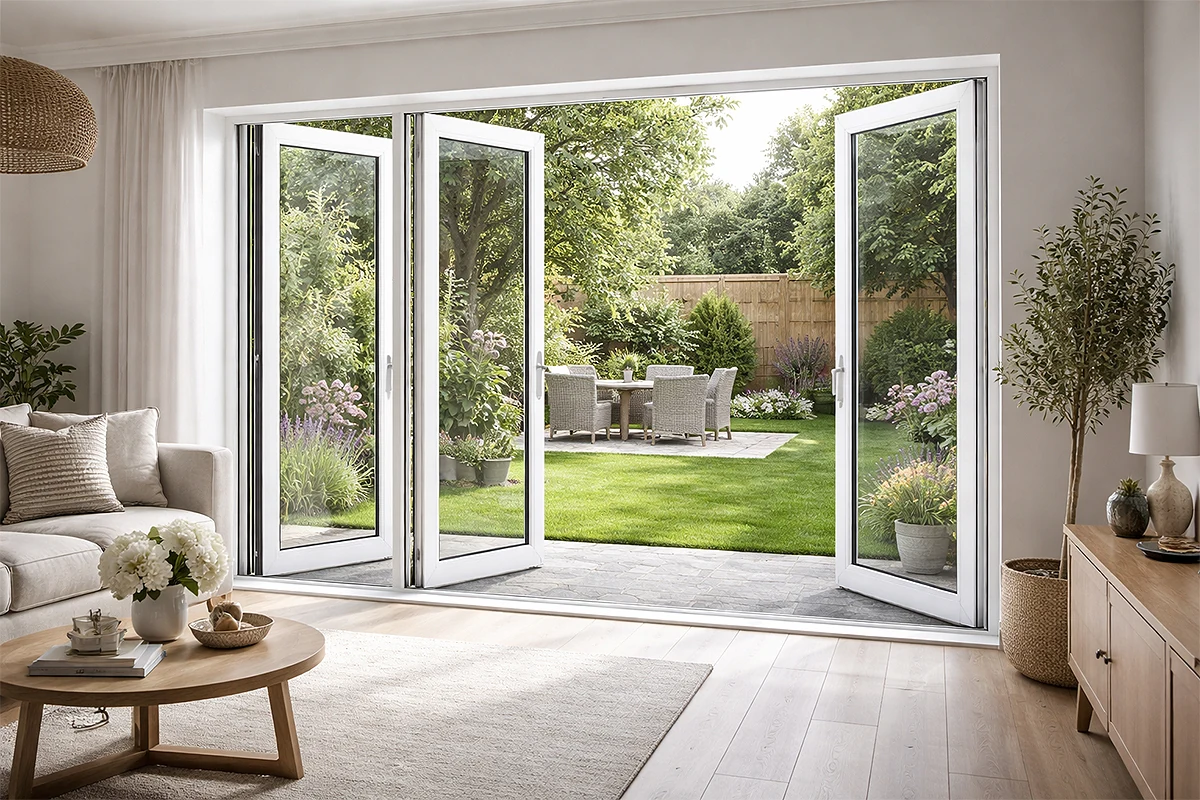
The affordable option of uPVC bifold doors is known for being maintenance-free. They insulate well and won't corrode. However, they are generally thicker and less rigid than aluminium. uPVC doors can also expand slightly in heat and may be more prone to minor alignment issues over time. Choose uPVC bifold doors if budget is your primary concern and you want a practical, low-cost solution.
Wood (Timber)
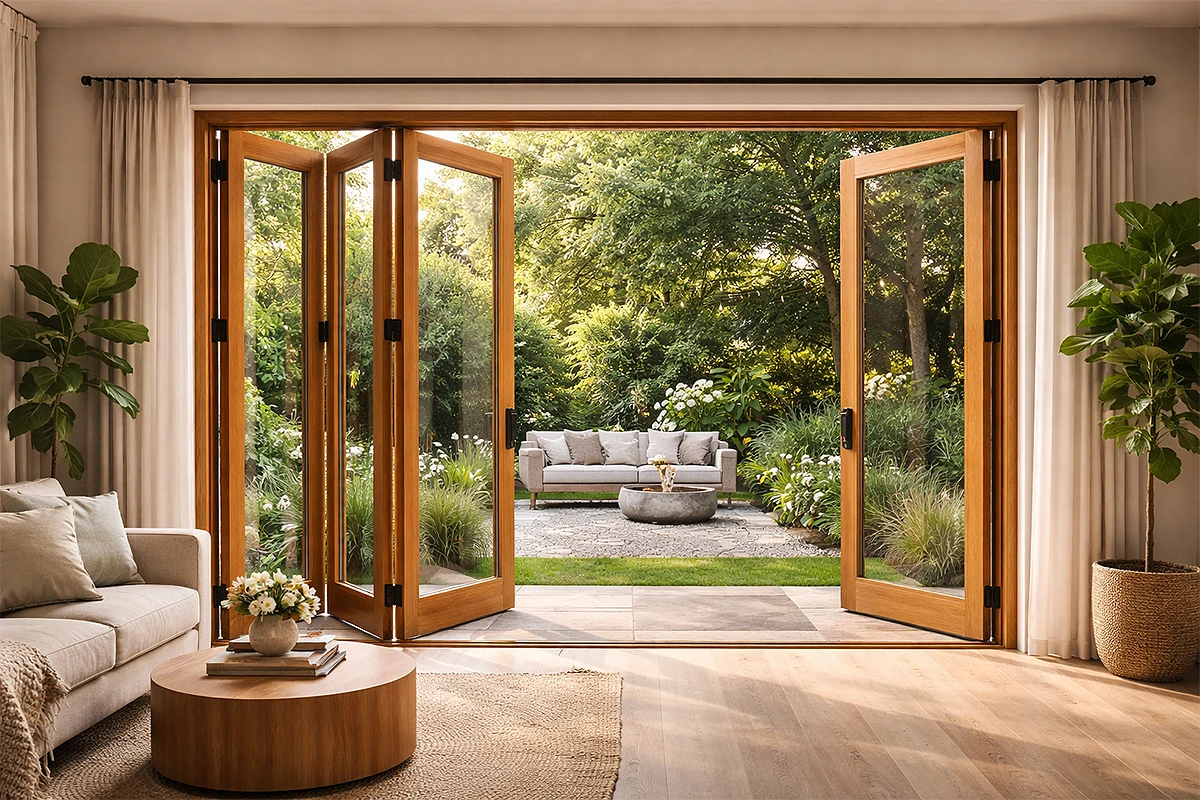
Wooden bifold doors are commonly made using hardwoods like oak or softwoods like pine, and offer traditional, high-end look and natural beauty. Timber is a good insulator and can be painted or stained to match your decor. However, wood requires regular maintenance. Periodic painting and sealing is required to protect it against weathering. Wood frames are generally the most expensive and heaviest option. They can last for decades if well-maintained, and homeowners choose them for the rustic charm they bring to classic or high-end architectural homes.
Composite
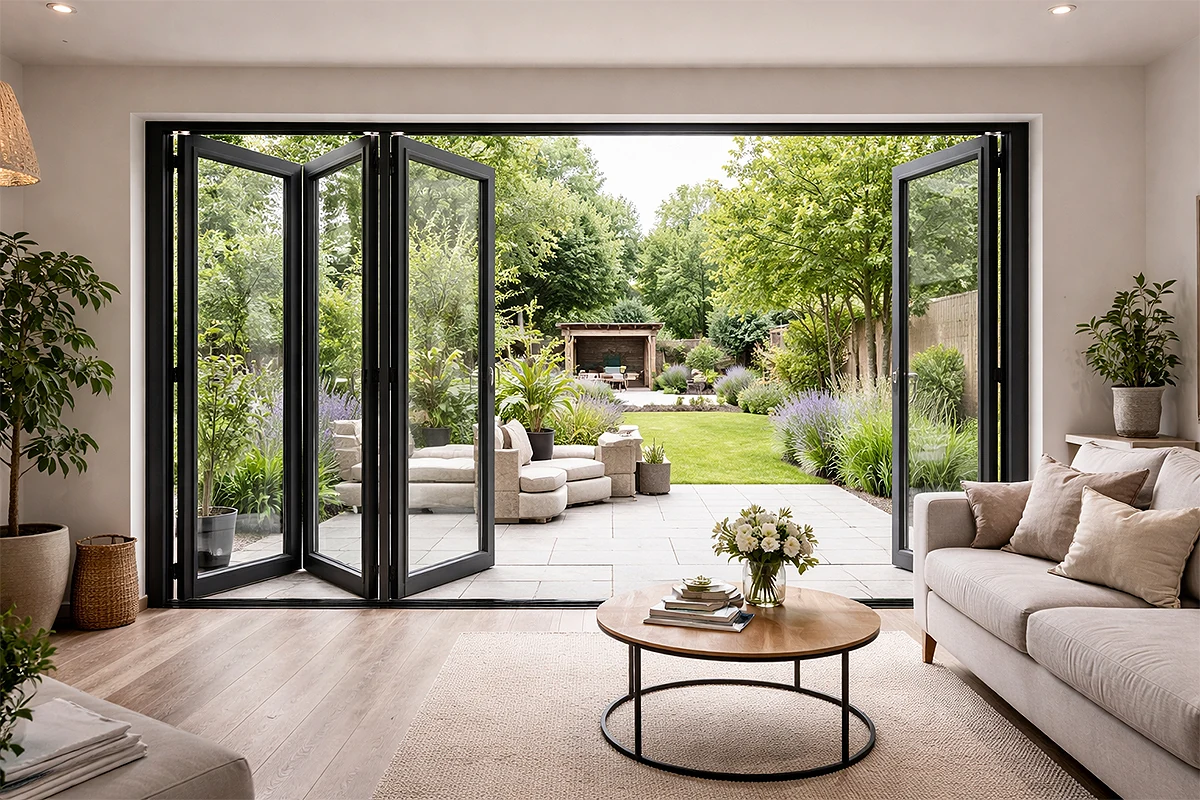
Some brands also offer composite or fibreglass bifold doors that aim to combine the benefits of other materials, like a wooden look on the inside with an aluminium exterior. Pricing and quality may vary widely in this category. If you're considering a composite bifold door, pay close attention to specific construction and reviews; a good composite door can be a solid middle-ground choice in terms of maintenance and appearance.
Panel Count and Configuration
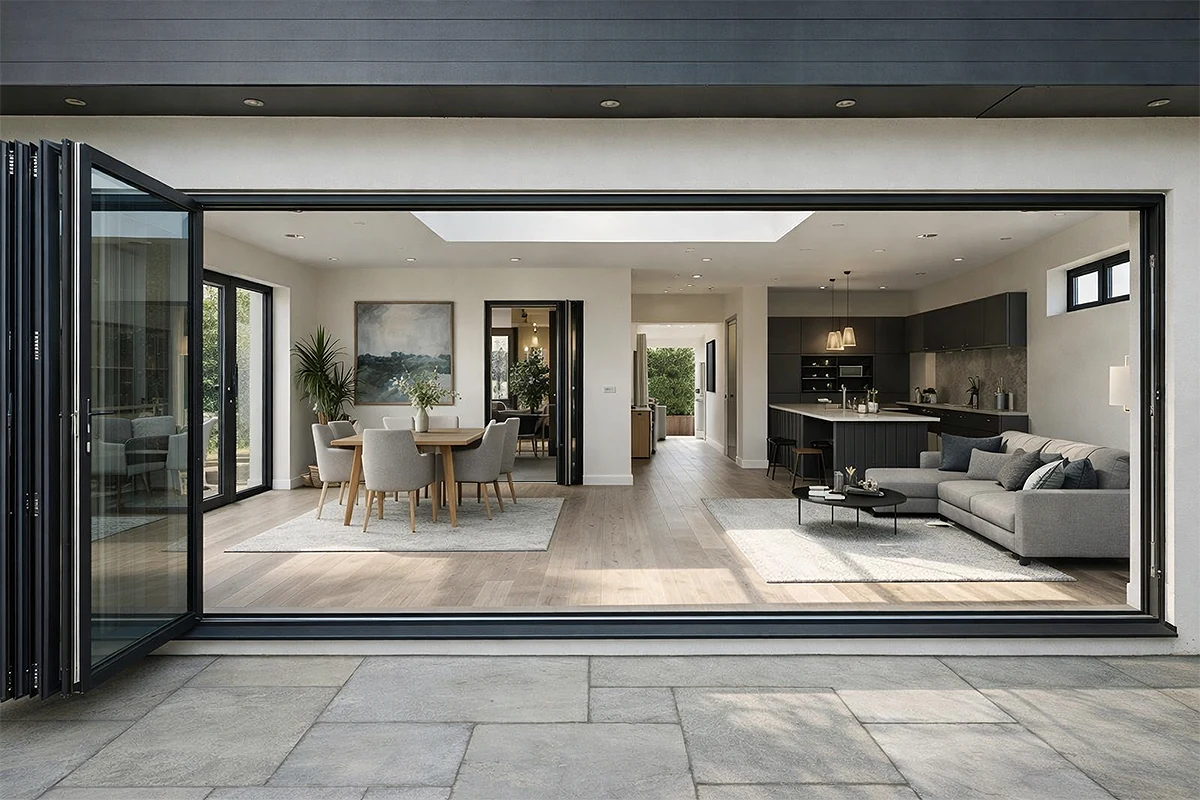
Bifold doors are modular in nature. You can have anywhere from a 2-panel up to 6 or 7 panels depending on the width of your opening. There are various things to consider when looking at the configuration of a bifold door:
Panel Count - Common bifold door design ranges from 2-panel up to 6-panel for residential options. A 2-panel bifold will simply fold to one side (like a simpler double-door), while the larger panel counts stack multiple panels. More panels open wider, but each additional panel also increases cost. Choose a panel count that suits your opening width and budget.
Fold Direction and Split - You can usually customise how the panels stack when open. Options include all panels folding to the left, all to the right or splitting in the middle. Decide what makes sense for your space: all to one side can clear the opening fully on the other side, whereas a split gives a symmetrical look and divides the stack. We would recommend thinking about what is on each side of the opening like furniture and light switches to determine the best stack side so that panels, when folded, are not obstructing anything important.
Traffic Door - If possible, design your bifold with a ‘traffic door', which is a single-hinged door within the bifold system that can be opened independently. It's usually one of the end panels that has its own handle and multipoint lock. This allows quick entry/exit without sliding all the panels, and is especially useful for external bifold doors that you'll use often. If your bifold has a traffic door, ensure its on the side that will be most convenient.
Inward vs Outward Opening
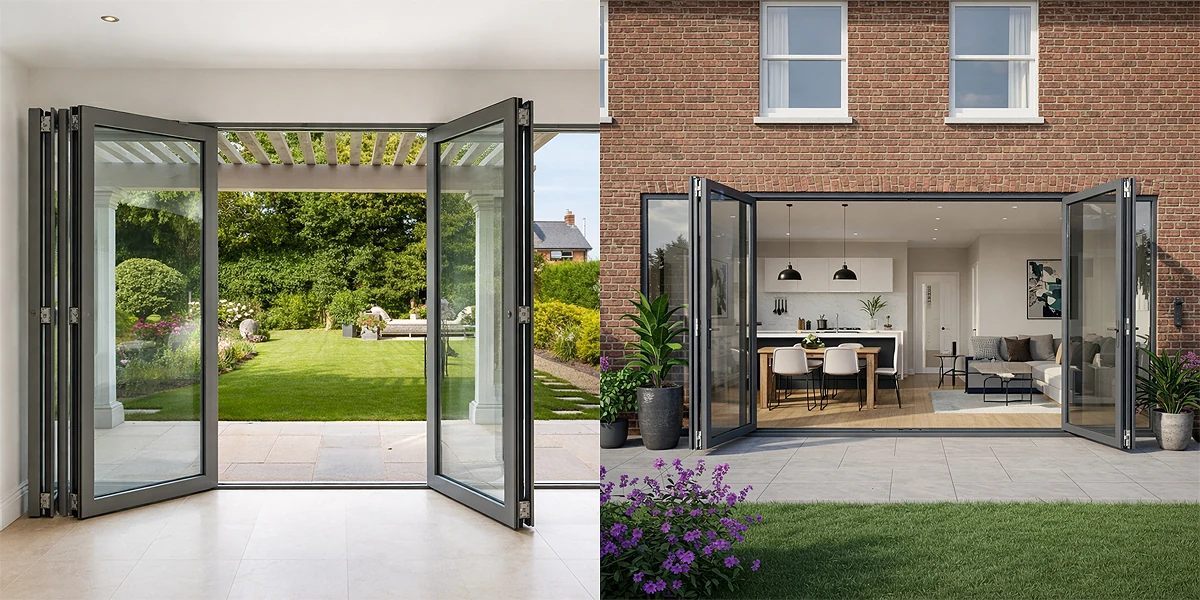
It is also important to consider whether the bifold door opens inwards or outwards, especially when you're choosing it for external purposes. One of the first things to think about is space. Bifold panels, when stacked open, will stick out either to the inside or outside. If you have limited room or tight furniture placement inside, you'll likely prefer the doors to fold outward so they don't take up your interior space. On the other hand, if you have a small balcony or limited patio space, an inward-folding door might be a better choice.
External bifold doors are designed to keep the weather out but their performance can depend on the opening direction and threshold design. Outward-opening doors often come with an integrated raised threshold or sill that directs water away from your interior. With inward-opening external bifold doors, extra care must be taken with the track and drainage since any water on the panels will drip inside when the doors are opened.
Security Features
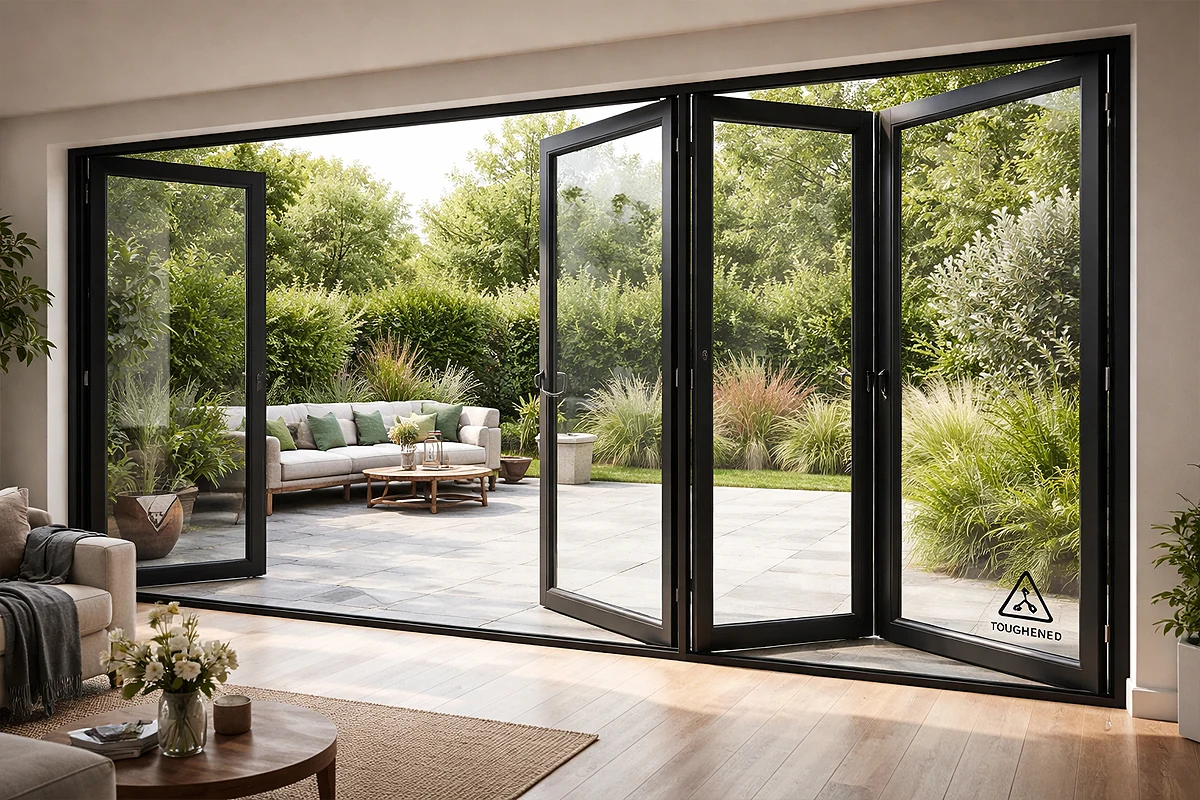
Security is a top concern when investing in large door systems. Because so much of some bifold doors is glass, it is important that toughened (tempered) glass is used in its construction. This glass is very hard to break, and even if it does, it crumbles into small pieces rather than dangerous shards.
Make sure the bifold door comes with a multipoint locking system on the main door, or on each door if there is no single main door. These locks secure the door at several points along the frame, making it much harder to force open than a single deadbolt. A well-constructed frame and quality hardware also contributes to security. The doors should feel solid, their hinges should be sturdy and preferably have safety features like hinge bolts or pins that prevent the hinge from being removed or tampered with. You can even consider extras like integrated blinds (to hide the view into your home when needed), a security bar or drop bolts that can be used when the door is locked at night.
Energy Efficiency
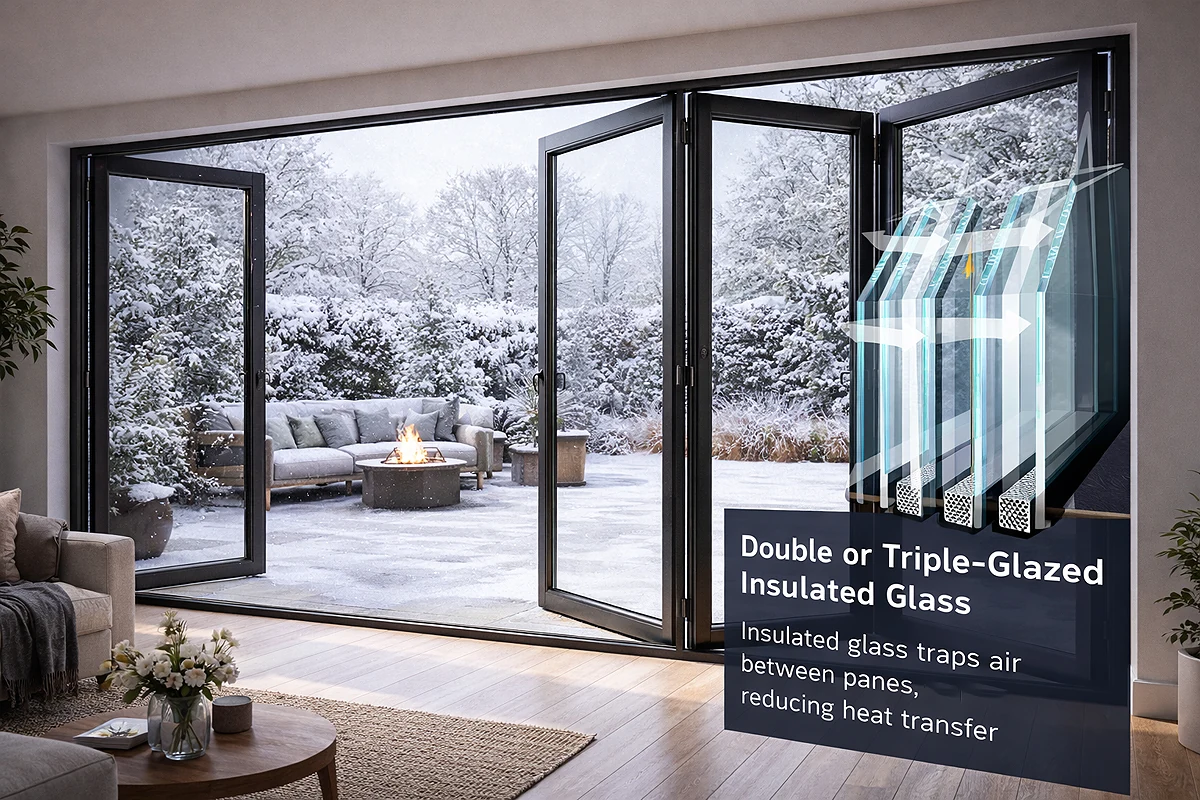
Energy efficiency is an important consideration for exterior bifold doors. Go for double-glazed or triple-glazed options for good insulation. Modern bifold door units come with insulated glass that traps air between panes, greatly reducing heat transfer and keeping your homes warm even in colder climates.
When choosing aluminium frames ensure they have a thermal break. This is a non-metallic material that separates the inside and outside aluminium parts of the frame, preventing heat from conducting through the metal. You should also check that the doors have good quality weatherstripping and seals all around. Gaskets should seal the gap between the doors when closed to prevent drafts.
Manufacturers often advertise the U-values of their bifold doors, which is a measure of how much heat transfers through the door. The lower the number, the better it is for insulation. A modern double-glazed aluminium bifold might have a U-value around 1.4-1.8 W/m2K, while triple glazing can get it closer to or below 1.0 W/m2K. For context, UK building regulations often require external doors to have a U-value of around 1.6 W/m2K or better. Good bifold doors will meet or exceed this.
Maintenance Tips for Bifold Doors
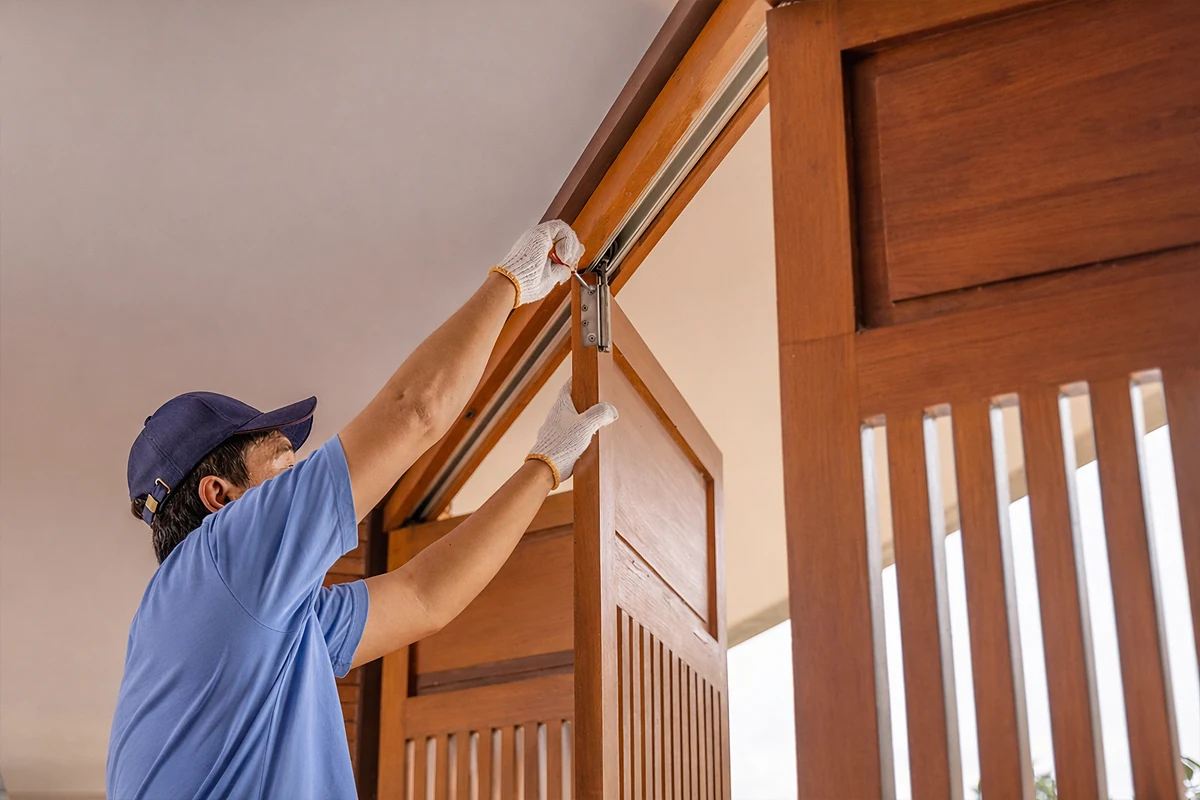
One advantage of bifold doors is that they are generally low maintenance. Keeping the door's bottom track free of dirt, grit and small stones makes movement easier. A bit of silicone spray or a light lubricant can be applied (if recommended by the manufacturer) to keep the rollers running smoothly. For the glass, just use a glass cleaner or soapy water. Streaks can show up on large glass panels, so a squeegee can be handy. For the frames, warm soapy water and a soft cloth will clean off dirt. Avoid abrasive cleaners, especially on uPVC or powder-coated aluminium doors, to prevent scratches.
Wooden bifold doors will need periodic painting or sealing as part of maintenance. Check if your door came pre-treated and follow the recommended re-coating schedule. Also, inspect the hinges, handles and locks a couple of times a year. Tighten any loose screws you see, and lubricate the locks and hinge pivots lightly if they feel stiff. Make sure the weather seals are intact. If any gaskets are loose or damaged, have them replaced to maintain insulation.
Disadvantages of Bifold Doors
While bifold doors have many advantages, it is important to be aware of their limitations as well. Being informed about them will allow you to plan accordingly and decide if bifolds are truly right for you.
Higher Cost - Bifold door systems tend to be more expensive to purchase and install compared to simpler doors. The hardware, multiple panels and custom fitting all add to the cost. To reduce cost, make sure to get multiple quotes and see if a slightly smaller configuration could work. Sometimes, adjusting the design, like using 3 panels instead of 4 can also save money.
Space for Stacking - When fully open, the folded door panels do take up space. In a large opening with many panels, this stack can be sizable. If you have limited side wall space adjacent to the opening, the stack could partially block the clear opening or just look bulky. Plan the layout so that panels stack to the side with more clearance. Also, odd-numbered configurations with a traffic door mean you rarely need to open them all fully unless you want to.
Complexity of repairs - With multiple panels and tracks, there's more that can go wrong when compared to a single-hinged door. Rollers can wear out, hinges might sag over time, locks might need adjustments. This isn't usually a big issue if you buy quality doors, most operate smoothly for many years. But you should know that is something does fail, you might need to get specialised parts.
Conclusion
Bifold doors look amazing in most decors, and choosing one for your home can be difficult for your home. We hope that this guide has made the decision-making process a bit easier and has helped you in making a choice.
To make your life even easier, we offer a wide range of bifold doors right here on our website. From glazed to unglazed, and offered by a variety of dependable brands, we have it all. You can even buy these doors unfinished, so you can paint them to match your decor. Check out the deals on our website today!
Related Articles
Category
Doors & WindowsPosted On
3rd February 2025